At GladToBe, we can leverage advanced tracking technologies to measure and optimize performance TV campaigns, ensuring our clients feel secure about sharing their data and trusting the reported values. We are flexible in working with various established tracking/attribution providers such as Innovid (tvsquared), Attributy, XAD Spoteffects, Realytics, always with the aim to provide the best service to our clients. Our goal is to help brands understand the direct, short-term impact of TV advertising while building trust in TV as a significant source for further growth long-term.
Here, we would like to share with you a simplified explanation of how the TV tracking process works:
1. Filtering Traffic Tracking providers monitor your website or app to see how people respond to your TV ads. But not everyone visiting your site came because of TV — some found you through Google, social media, or other channels. So the first step is filtering out the noise and focusing only on visitors who likely saw your ad. This involves filtering by the region where the campaign aired and focusing on brand traffic, excluding sources like newsletters, online campaigns, and external links.
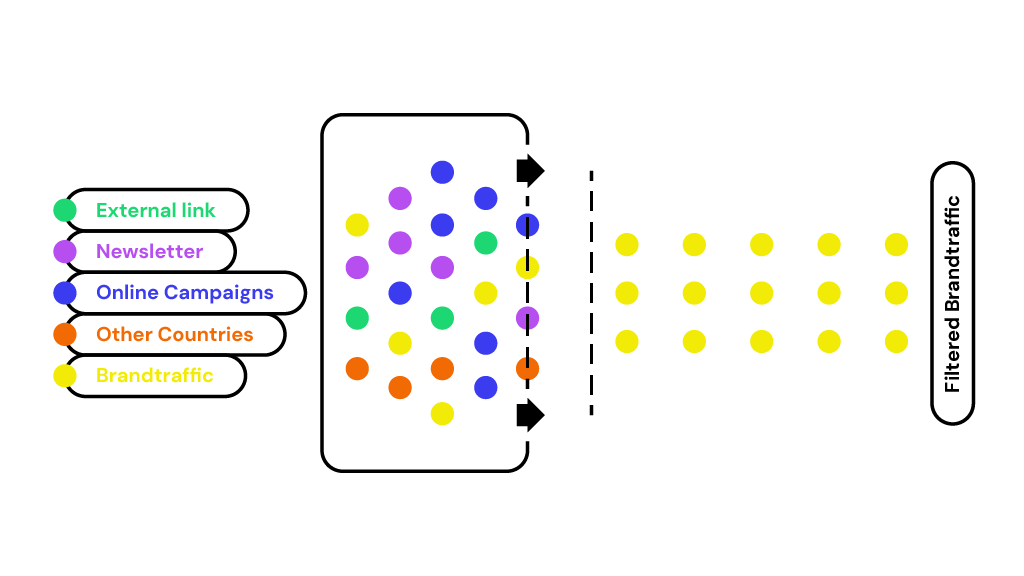
What is Brand Traffic? Brand traffic means visitors who probably came because of your TV ad — for example, someone who types your website directly into their browser, or searches for your brand name on Google right after seeing your spot.
2. Calculating the Baseline Before measuring TV impact, providers need to know what ‘normal’ website traffic looks like. How much traffic does your site get on a typical Tuesday at 8pm without any TV ads running? This normal level is called the baseline — and it’s recalculated constantly to account for things like time of day or seasonal patterns.
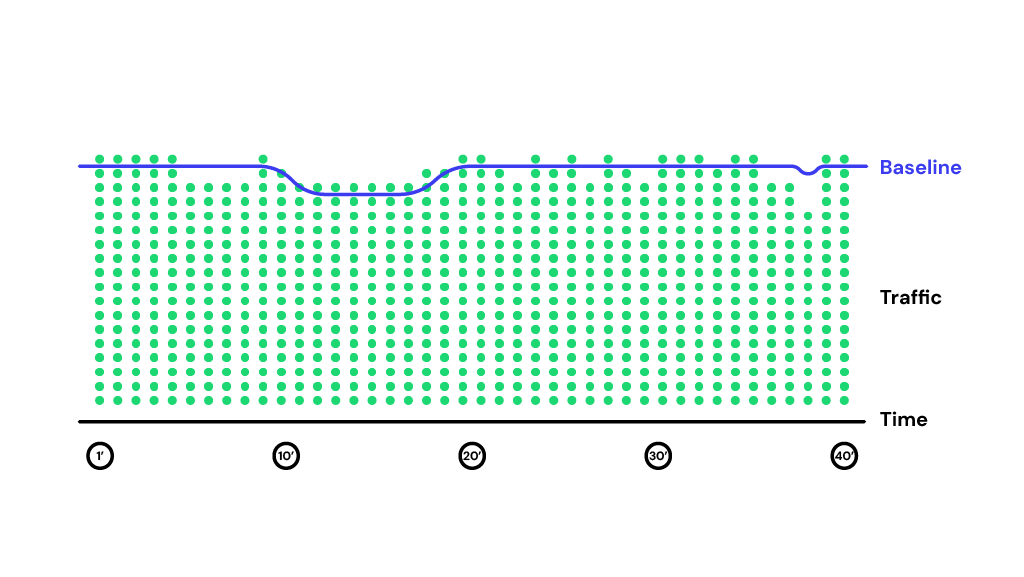
What is a Baseline? The baseline is simply: how many people would have visited your site anyway, even if you hadn’t run any TV ads?
- Identifying TV Impact After your ad airs, providers look at what happens in the next few minutes. This short window — usually 5-10 minutes — is when most viewers react. If there’s a noticeable spike in traffic during this window, it’s likely because of your TV spot.
What is a Spot Period? A short window of time immediately following a spot airing, typically within 5-10 minutes, where most responses occur.
Not every small bump in traffic means your TV ad worked — sometimes traffic just fluctuates naturally. To avoid false alarms, providers set a threshold: only if the spike is clearly larger than normal fluctuations do they count it as TV-driven.
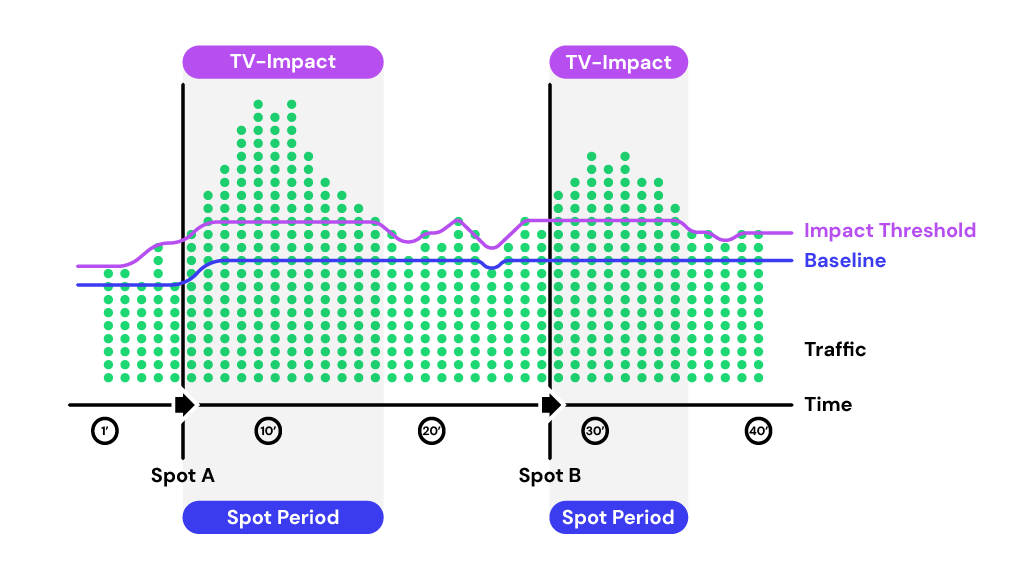
What is Impact Threshold? The minimum spike size needed before providers say: ‘Yes, this was caused by TV.’
- Measuring TV Impact Once a TV-driven spike is confirmed, providers measure the uplift — the extra visitors you got because of the ad. They subtract the baseline (visitors who would have come anyway) to give you a clean number: this is what TV actually delivered.
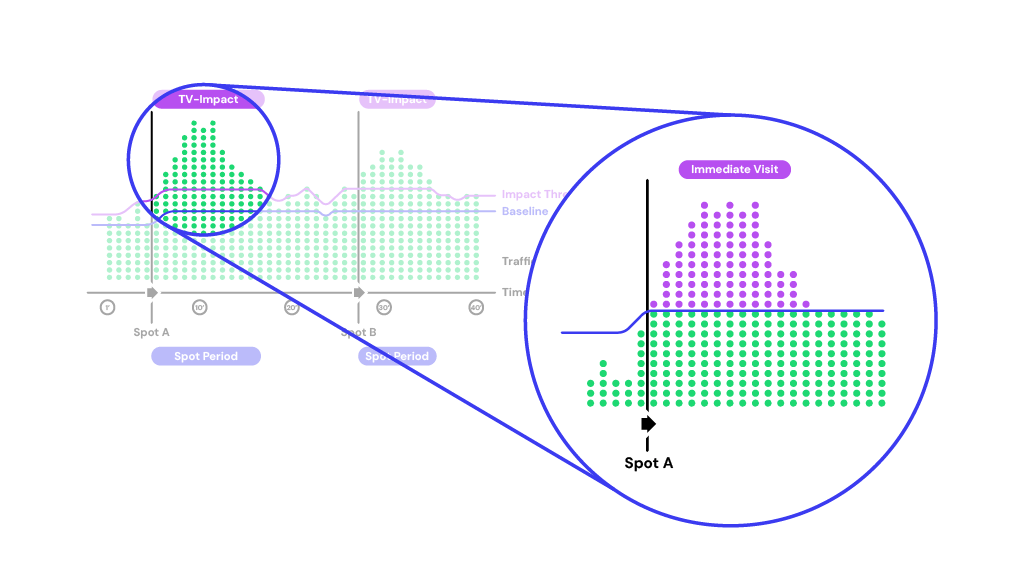
- Allocating Overlapping Spots What happens when your ad runs on two channels at the same time? Providers split the credit based on each channel’s likely impact. A spot on a bigger channel with more viewers gets a larger share of the traffic.
What is a Spot Score? A spot score estimates how much impact a particular ad placement is likely to have — based on factors like audience size, GRP* reach, and cost.
*GRP or Gross Rating Points, is a standard measure of audience reach.
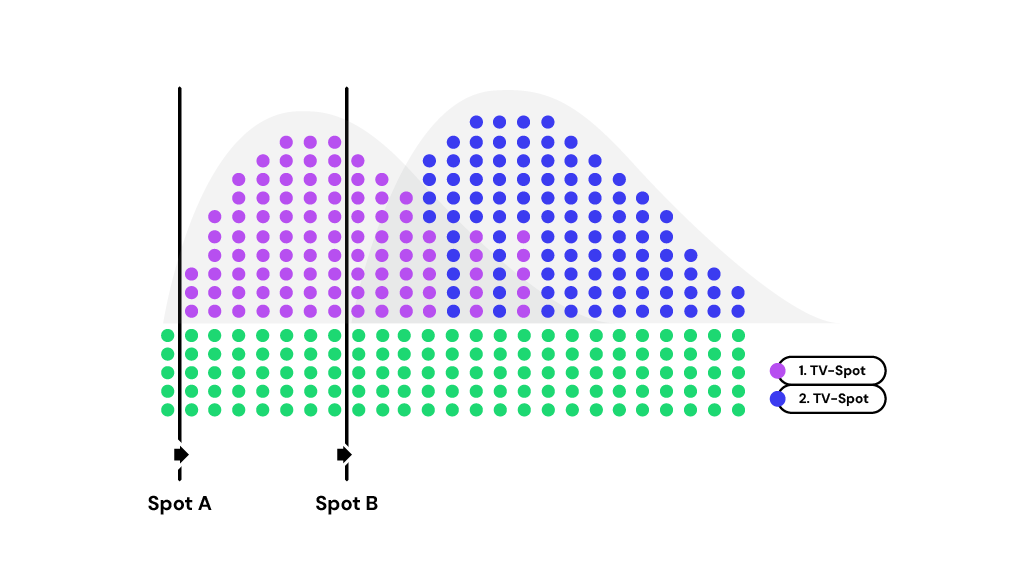
- Tracking and Allocating Conversions Visitors who arrive during a spot window get tagged as ‘likely from TV.’ Providers then track whether these visitors convert — sign up, purchase, download — and subtract any conversions that would have happened anyway to give you a realistic number.
Because ROI or ROAS is the decisive metric for successful campaigns, the providers can share deeper insights into conversions. The providers can track both immediate and total conversions resulting from your TV campaign, enabling you to better understand your customers’ behavior. For overlapping spots, the providers can allocate the conversions according to the same ratio used for allocating immediate visits.
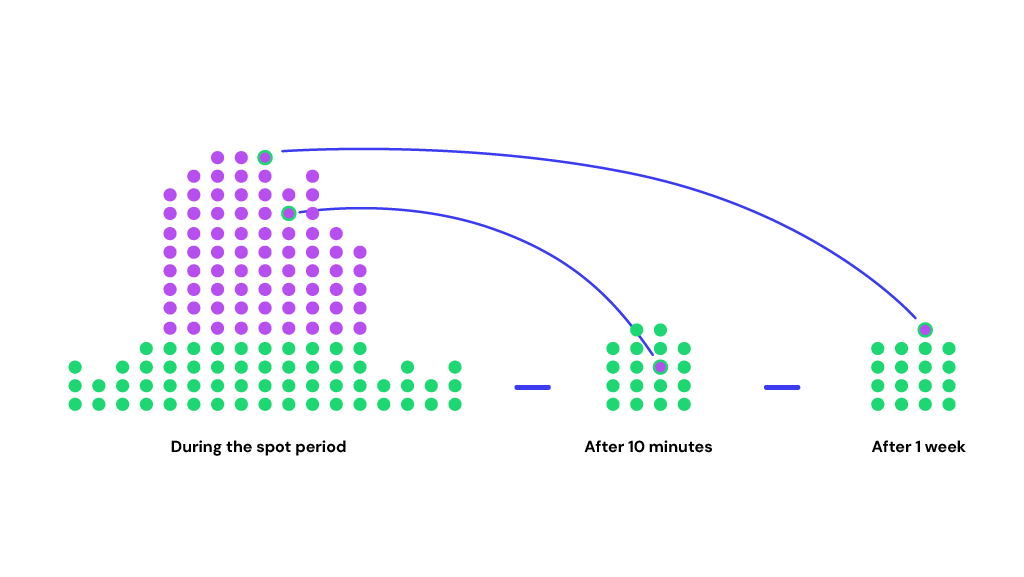
What are Immediate vs. Total Conversions? Immediate conversions happen right away — someone sees your ad, visits your site, and buys. Total conversions include people who come back later to convert — maybe an hour, a day or a week after first seeing your ad.
- Analyzing TV Campaigns Good TV campaigns are built on good decisions — which channels, which times, which days. Tracking providers give you the data to make those calls: cost per visit, response rates, and conversions — so you can see what’s working and do more of it. It’s important to note that our explanation provides a simplified overview of measuring TV impact. Each tracking/attribution provider may use their unique approach and technology to map the consumer journey and accurately attribute responses to TV.
To experience the granularity and power of TV tracking/attribution insights firsthand, we invite you to get your hands on a free sample TV report. Simply fill out the form below and we’ll be delighted to send it your way.
To experience the granularity and power of TV tracking/attribution insights firsthand, we invite you to get your hands on a free sample TV report. Simply fill out the form below and we’ll be delighted to send it your way.